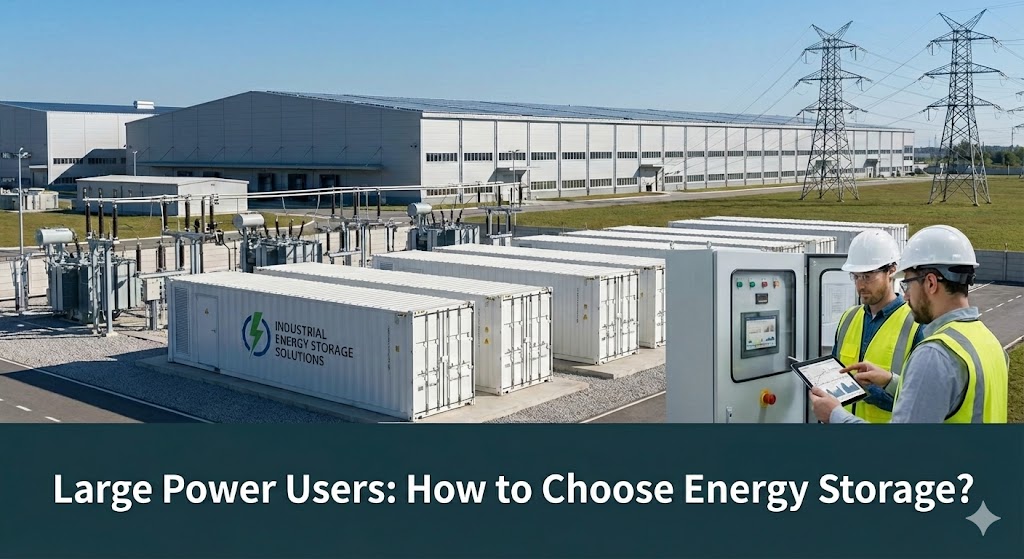
Large electricity consumers have been using energy storage systems for some time now. Besides solar and wind power, the focus on energy storage systems has rapidly increased in recent years due to power shortages. However, the cost per kilowatt-hour for energy storage systems cannot be calculated using the concept of “batteries.” Managing and maximizing their benefits is a crucial long-term operating cost that large electricity consumers need to assess.
Energy storage systems require relatively less installation space and have a shorter time to grid connection. They can also utilize PCS (Power Regulator), EMS (Energy Management System), and BMS (Battery Management System) to set parameters and operate rules, achieving functions such as reducing contracted capacity, stabilizing power supply frequency, and providing backup power.
Containerized energy storage systems should not only pass UL9540 or IEC62933 certification, but their PCS, EMS, and BMS should also obtain corresponding certifications. A Battery Management System (BMS) comprises battery cells, modules, and a Battery Management Unit (BMU). Battery cells and modules should meet UL1642, UL1973, IEC62619, and UN38.3 standards, while the BMU should meet IEC60730 standards.
Safety standards, necessary certifications, and reputable suppliers are the most important foundations for achieving stable, safe, and reliable operation of an energy storage system.
Japyu’s energy storage management system, using a BMU paired with energy storage modules (ENPLUS-M + ENPLUS-4.0BB), provides users with flexible combinations and application modes. Made in Taiwan, the independently developed BMS and independent laboratory provide managers with comprehensive assurance, achieving certifications that meet regulatory requirements. This ensures that when building an energy storage system, you obtain reliable international certifications and nationally recognized safety requirements, protecting the safety of your plant, personnel, and systems.